Transplanted Weavings
Ticino Palm Weaving Workshop with Lea Bartolo-Nerona
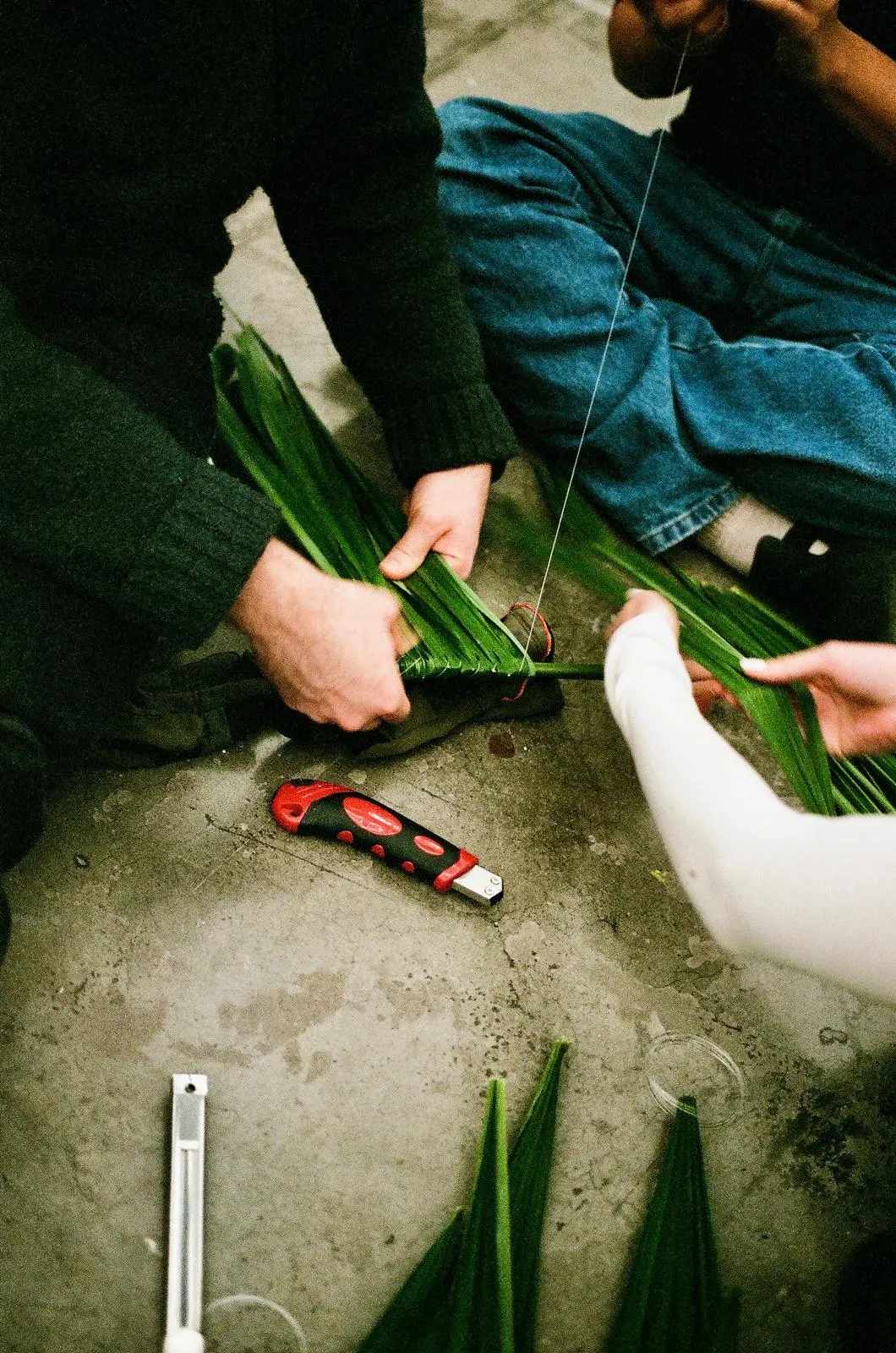
Transplanted Weavings is a participatory workshop exploring migration, adaptation, and belonging through the act of weaving. The workshop was facilitated with Lea Bartolo-Nerona, a migrant Filipina worker based in Milan who learned weaving at the age of ten from her aunt in Capiz, Panay Island in the Philippines. Traditionally, the weaving techniques she inherited use Nipa palm leaves, an important material in Filipino vernacular architecture and craft.
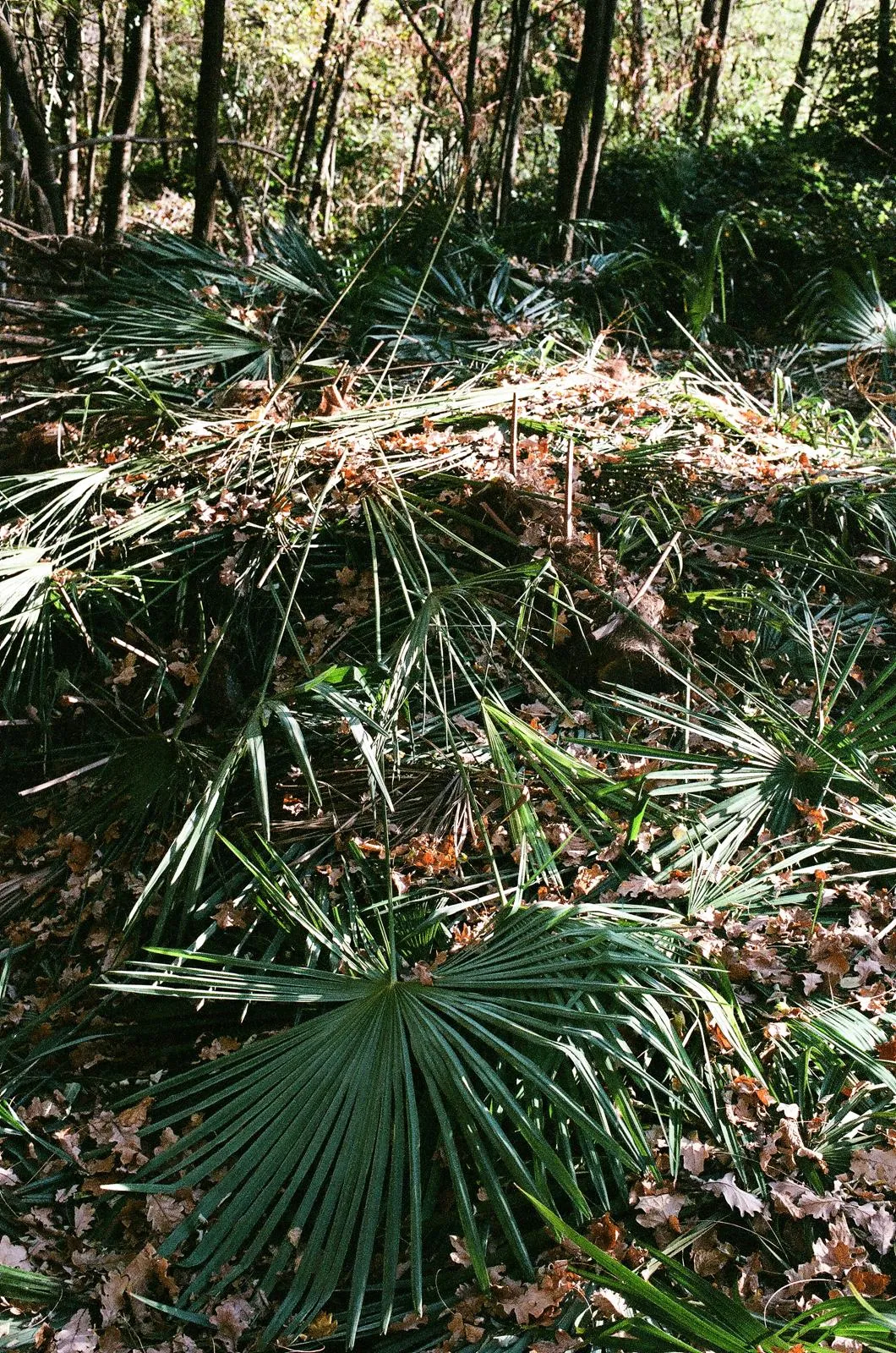
For this workshop, however, we worked with Ticino palms (Trachycarpus fortunei) collected in Tegna with the support of researchers from the Swiss Federal Institute for Forest, Snow and Landscape Research WSL. While valued ornamentally, these palms are now considered an invasive species in parts of southern Switzerland, where their proliferation threatens native forest ecosystems. Researchers have described the plant as “an inconvenient beauty under scrutiny”—a species admired for its aesthetic presence yet contested for its ecological impact.
By weaving with these palms, the workshop situates craft within a broader conversation about migration—both botanical and human. Plants, like people, move across geographies through trade, colonial expansion, tourism, and climate shifts. Once transplanted, they must adapt to unfamiliar environments, sometimes flourishing, sometimes being labeled invasive.
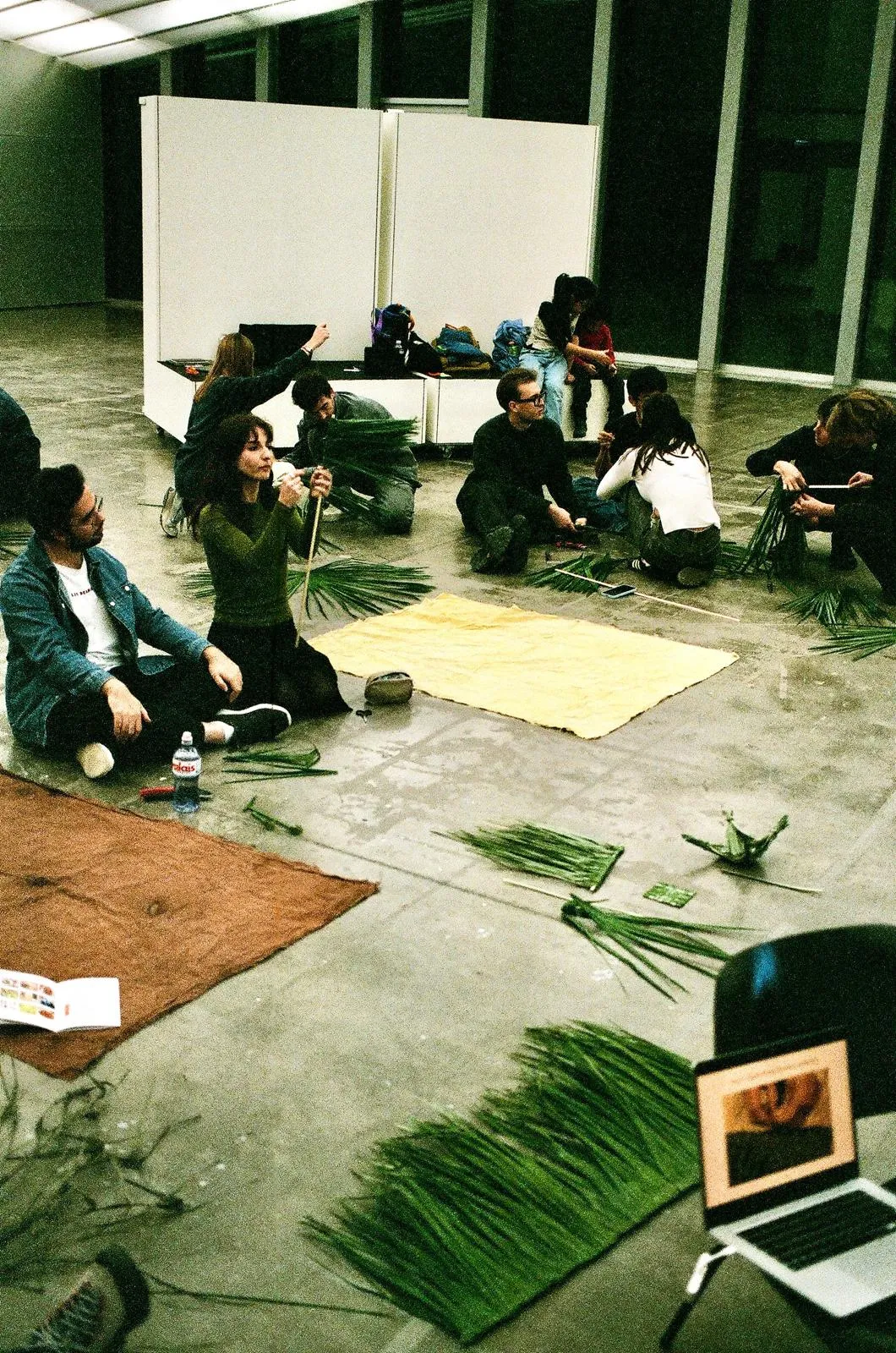
Participants were invited to reflect collectively on questions such as:
What does invasive mean to you?
Have you ever had to transplant yourself—across a place, a job, or a way of life?
What helps someone take root in unfamiliar ground?
When have you felt othered, and how did you adapt?
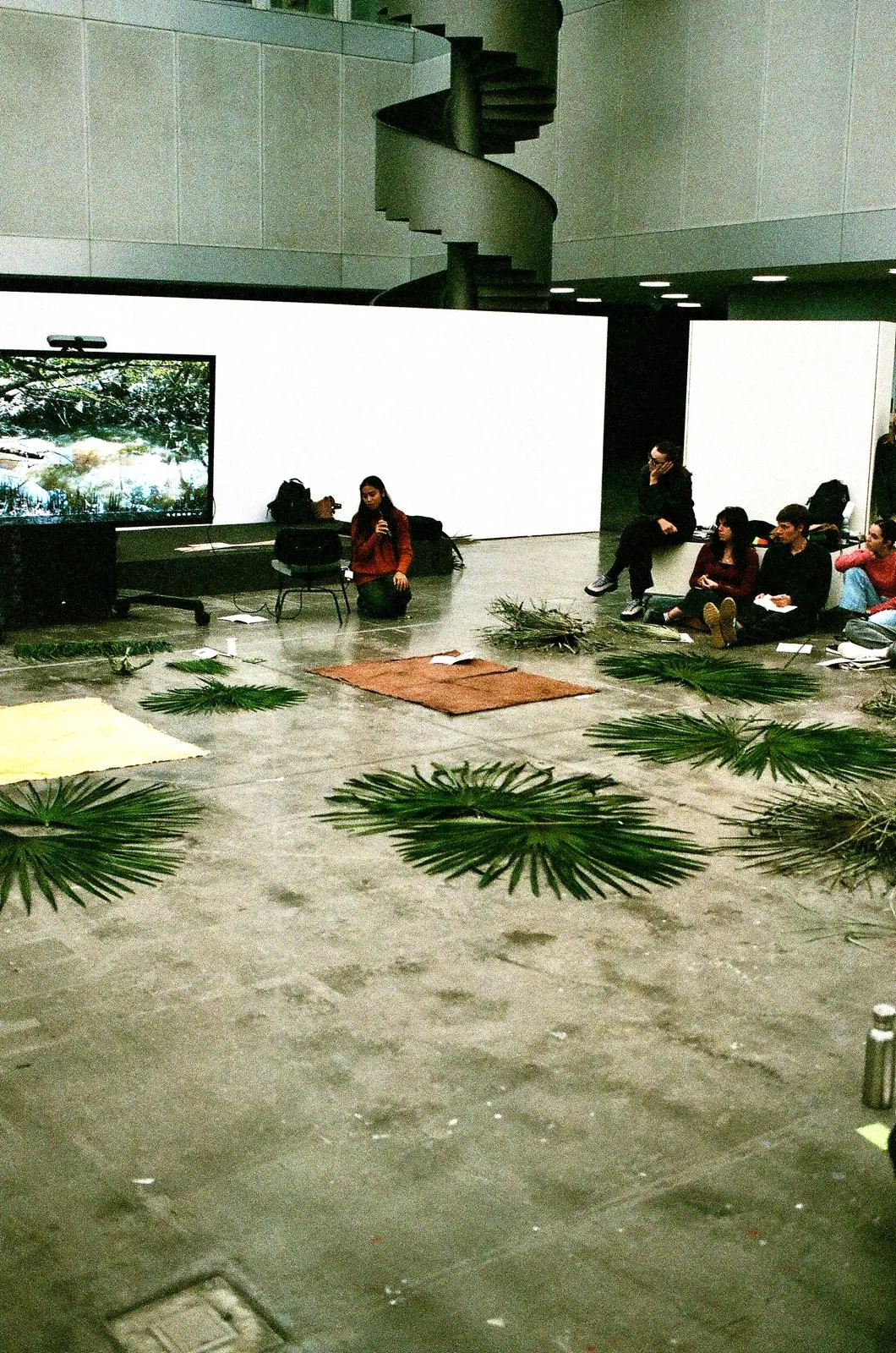
Alongside the weaving exercise, participants contributed written reflections onto a plant-dyed textile I produced in the Philippines using natural dyes. The cloth became a collective tapestry of responses layering voices, memories, and reflections on displacement and belonging.
The workshop connects local ecological debates in Ticino with global histories of migration and craft knowledge. Lea’s weaving practice carries techniques passed through generations of Filipino artisans, while the Ticino palm represents a plant that has traveled far from its original habitat. Bringing these elements together creates a space where weaving becomes both a material practice and a method of storytelling—linking plants, people, and places.
Transplanted Weavings forms part of my ongoing artistic inquiry into migration through the lens of ecology and material culture. By working with plant fibers, oral histories, and collaborative making, the workshop asks how processes of transplanting—whether botanical or human—shape the ways we adapt, survive, and build community in new environments.
References:
Boschi, K., Conedera, M., & WSL Researchers. (2023). The Ticino palm: An inconvenient beauty under scrutiny. Swiss Federal Institute for Forest, Snow and Landscape Research WSL. https://www.wsl.ch/en/news/the-ticino-palm-an-inconvenient-beauty-under-scrutiny/
Swiss Federal Institute for Forest, Snow and Landscape Research WSL. (n.d.). Forest research and invasive plant monitoring. https://www.wsl.ch/en/forest/
Corner, E. J. H. (1966). The Natural History of Palms. University of California Press.